
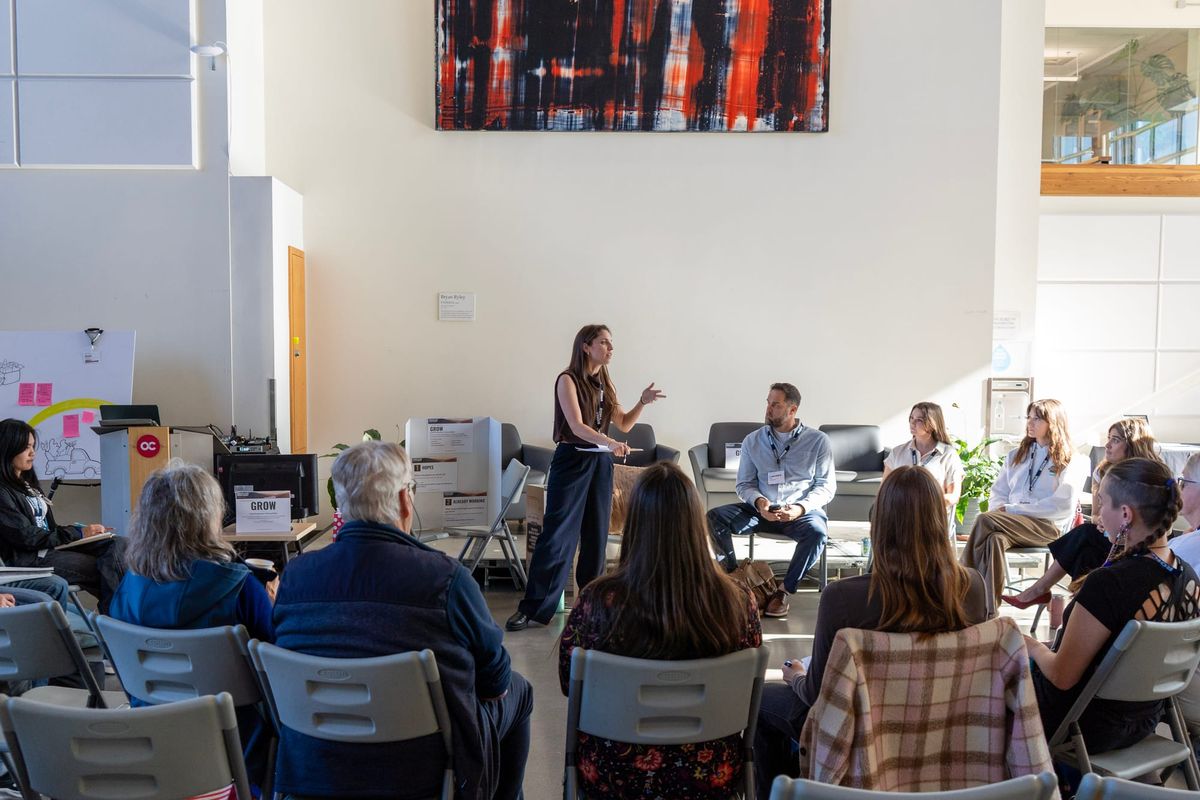
Co-creation is all about collaboratively partnering to create what has yet to be envisioned or built. It is distinct from theory, different from solo work, and separate from independent development.
Want to dig deeper? Read more:
Co-creation: Working together with our communities
Co-creation is often:
- Project-based. It's about making something. A service, a brand, a product, a document, an organization. It's not just "thinking about it" or academically exploring the idea of something. The emphasis is on creation.
- Collaborative. It's easier than ever to make something on your own, with AI-assisted tools. Building it in partnership with others, with the intention of testing it with real humans, helps get you out of that isolating cycle. That's the co.
What does co-creation need, to be effective?
- A facilitator, to listen to the perspectives, synthesize them well, and help the plan keep making progress.
- Leaders: engaged team members, able to make decisions, in your domain.
- Community members. Whether "users" or folks close to the community's core, the humans and relationships at the heart of this are a key ingredient for co-creation.
- Tangible outputs. Pencils and paper, napkin sketches, physical room layouts, clickable web mockups, cardboard cut-outs. Making the imagined become physical is a key part of prototyping.
- Tests. Knowing what you're looking for matters. How will you know if the work is effective? What feedback do you need?
- Time. If you only have a week, that's fine; if you have a season in which to grow, even better.
What's the difference between co-design and co-creation?
- "Design" tends to stay in the realm of planning, strategy and concept: everything except the making.
- Co-creation results in making. Other words include co-development or co-production. It truly is a group project, a collaborative effort, not just the development of an idea.
- In some cases, co-design is seen as the work of community engagement, or inclusive design. This deeply democratic work of inclusion often involves careful engagement with people with marginalized identities, experiencing barriers to participation. Therefore, co-design (or, inclusive design) is often an act of partnering with people with disabilities, or who experience discrimination, to include their voice in the work of helping systems or services become less discriminatory. (See the work of Australia-based designer KA McKercher and their book Beyond Sticky Notes for a deeper exploration.)
What makes co-creation go wrong?
- Lack of trust: When relationships are fractured or fragile, and not willing to step into the brave work of real conflict.
- Power imbalances, treated dishonestly: When those in power are not able to make decisions, take authority, or keep promises, or when they fail to recognize their influence on a system.
- Pre-baked solutions: When participants are already committed to a specific course of action, and aren't willing to entertain new ideas.
- Threats and fear: Psychologically unsafe environments, where the mental or physical well-being of participants can't be guaranteed, are challenging for making real progress.
What are some examples of co-creation?
- Making a new advocacy organization
- Creating a report for a sector
- Hosting a team retreat to develop new plans and support team culture
- Doing service design to revamp how a program operates
- Creating a new network-style organization to support a sector
How can I get help with co-creation?
You can read about it online, with resources like this guide to facilitation.
You can also call a co-creation consultant! Only, well, that's not really a job title. Instead:
- Sometimes a team or person who leads co-creation processes might be called a facilitator.
- It's also been referred to as "change management," though that tends to be about corporate implementation of top-down solutions.
- We tend to call it human-centred design.
- We're called Co.school. You can talk to Kevan, founder and principal facilitator, and we can explore more about the process you're looking to lead.