Food Link is a mobile app built by United Way British Columbia (UWBC), helping food to people who need it. It connects non-profits who serve people facing food insecurity with food suppliers who have food to give, and it helps volunteers move food from one place to another. The app launched in three pilot communities, with a goal of reaching more of the province.

Getting Food Link built and launched took real teamwork between UWBC’s food security, community impact and technology teams. And it worked. The teams closest to the app could envision a bigger version of it. They wondered: could it help solve harder supply chain problems? Could its data show community impact more clearly? Could the same tool one day help coordinate emergency response and volunteers, not just food?
Getting to that next-level vision would require clarity and collaboration: should United Way build it themselves, or buy something that already exists? Which team would take the lead? What steps should happen first?
Co.school as clarifiers
UWBC’s food security team asked Co.school to help host a unified gathering across their divisions: not just the Food Security team, but Community Impact, IT and Business Intelligence teams. Together, the goal was to agree on a shared vision, name what the app truly needed, clarify roles, and leave with a plan the team owned. UWBC also wanted to be ready to make a “build or buy” decision and to seek funding for the next phase.
Listening before we lead
To get started, we interviewed leaders from all sides of the work: food security and technology. We asked what success would look like a year from now, what would be lost if this work didn’t happen, what was getting in the way, and how much support the work had across the organization. We wrote up what we heard and used it as the starting point for the sessions.
Purpose-first
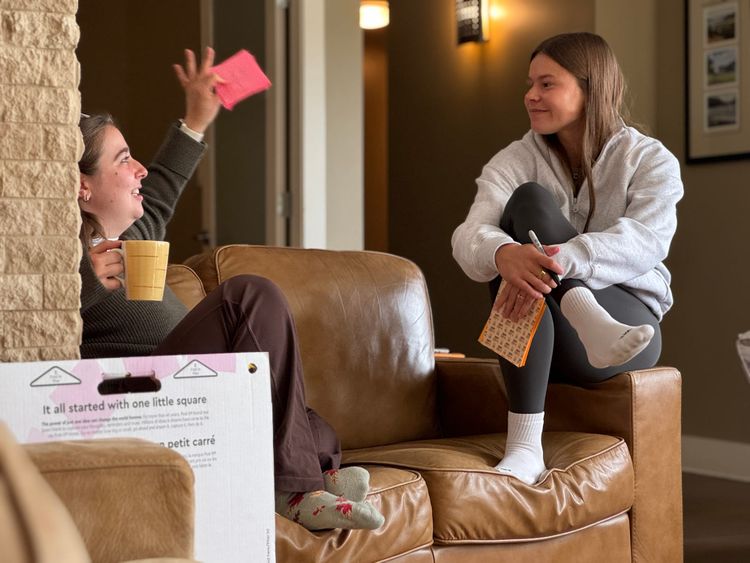
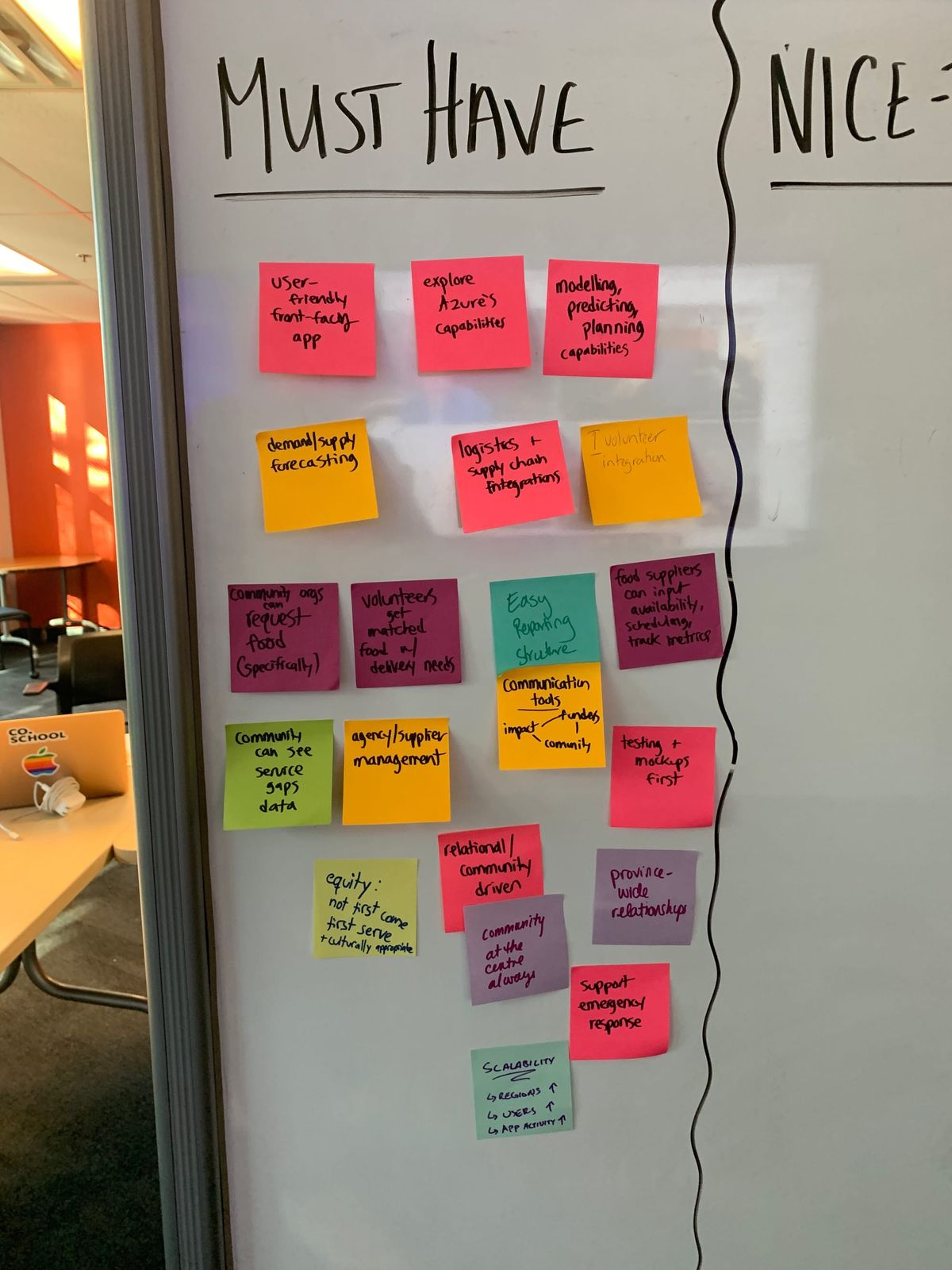
Gathering at United Way’s Burnaby headquarters, a classic building on the edge of Deer Lake, the group came ready to find a way forward. The first session focused on purpose and vision: could we start by naming what we are trying to achieve, and agreeing on how we wanted to work together? Then they took an honest look at the app as it was: its features, how people used it, and what impact it was having. From there, the group looked at outside examples for inspiration and developed their own renewed visions for what Food Link could become. This divergent thinking presented multiple future directions for them to choose from. To slice through the possibilities, we helped them set success criteria and sort ideas into “must-have” and “nice-to-have” features.
From a purpose to a plan
Returning after the dust settled, the second session was designed to turn that vision into action. The group mapped out who would be doing what, what skills and capacity they were already in possession of, and what was missing. They laid out the steps toward the next phase of the app and began building a business case: why this matters, what exactly they would build, who needs to be involved, and how they would get there.
The team left with a shared vision, a list of must-have features, clearer roles, and the starting pieces of a business case, all created by the team and owned by them. The teams at United Way continue to lead forward with Food Link, a crucial link for British Columbians to get access to sufficient, nutritious food.