

I was leading a group of folks through a 3-day leadership summit this summer, where part of the work was to help these leaders re-imagine the potential of their system. What if they were to look beyond how they organization was designed today, and instead come at the challenge with some alternate inspiration?
To facilitate this process, we provided groups with five different sets of inspiration, drawn from nature, culture, technology and business. Mini case-studies, if you will, looking at the different ways in which resources can be distributed, information can flow, and work can be structured. The groups gathered to read the examples and then spent time in breakout groups going over the discussion questions. From there, they generated new ideas to bring back to the larger forum based on their small group's explorations.
The discussions were fascinating and full of thought-provoking perspectives, and helped the group step outside their conventional frame and begin seeing new design options. They were really well received, and participants asked if they could take home the sheets with them afterwards, for continued reference. I'd like to share these prompts with you, in case they can be helpful in sparking your own conversations! Reach out if you'd like the printed resource, or some support designing a conversation with your group to move through exercises like this.
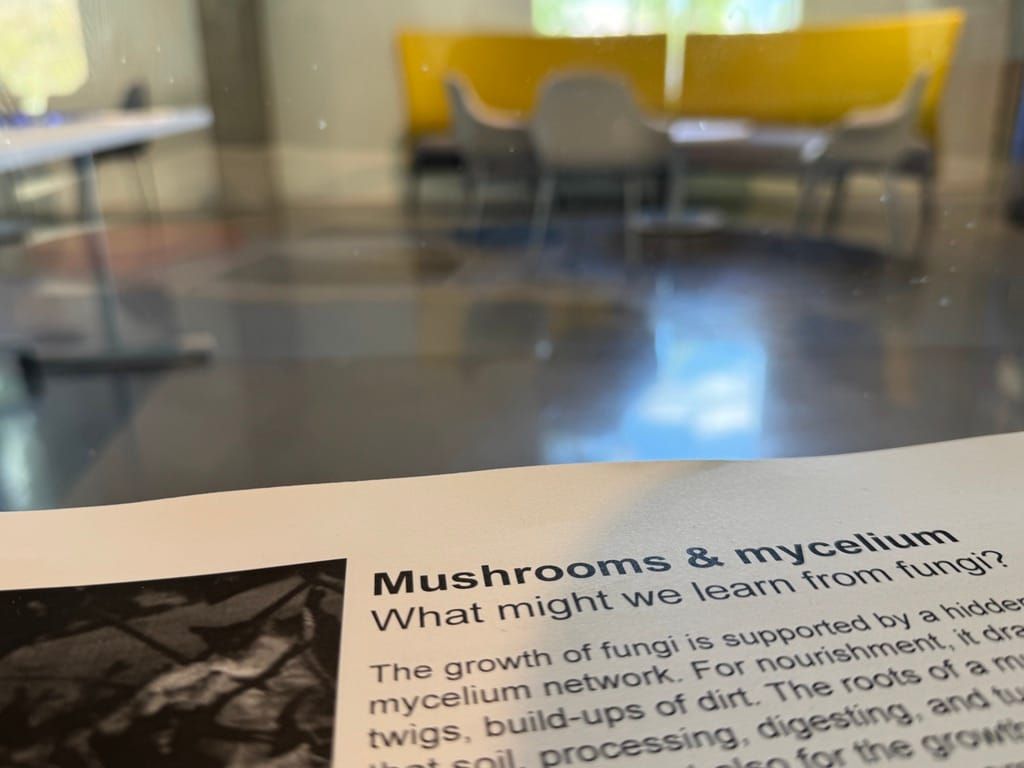
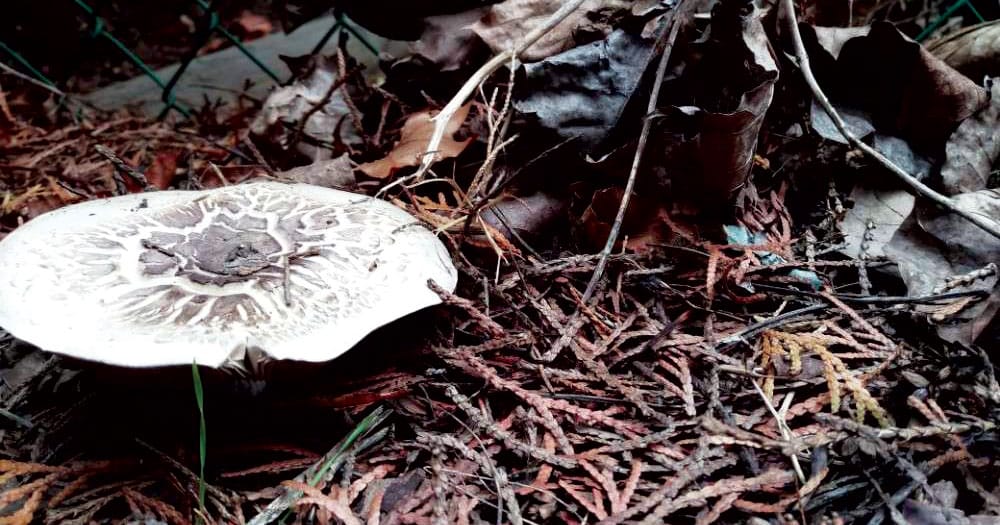
Mushrooms & mycelium:
What might we learn from fungi?
The growth of fungi is supported by a hidden and intricate mycelium network. For nourishment, it draws on fallen leaves, twigs, build-ups of dirt. The roots of a mushroom extend beneath that soil, processing, digesting, and turning it all into food, not only for itself, but also for the growth of other species of plant come spring. As for the mushroom itself, it exists only for a short time, between the heat and growth of summer and the cold dormancy of winter. As Dean David Tiessen writes, “the mushroom springs up against the backdrop of decay, and indeed depends upon that decay for its own source of life, and for the sake of new life for others like itself.”
Reflection questions:
- Where have we been assuming decay, that might actually be sources of nourishment?
- What “underground networks” are already in place in our community, powering things outside of formal process?
- What would change if we accepted our role as being fleeting, temporary?
Sagrada Familia:
A multi-generational architectural masterpiece
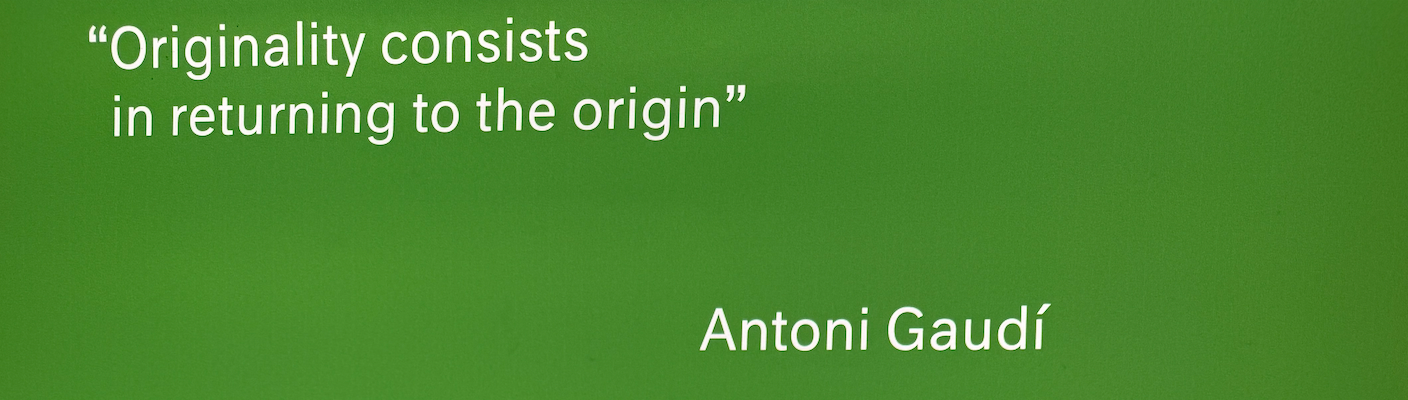
Since 1850, this remarkable cathedral has been being built in Barcelona, Spain. When architect Antoni Gaudi came on board, he wondered what it would be like to push against tradition (of both architectural and religious) to imagine a temple that draws on principles of nature. For him, this is how he defined originality: a return to origins. So he studied honeycombs, leaf patterns, bones, human anatomy, spiral patterns in nature, and worked with plaster models to experiment with alternate building structures. The result is a formidable, awe-inspiring experience that feels like the columns are dripped candle-wax, the beams are calcified bones, the stained glass replicating the eerie northern lights. He never saw it finished. Instead, the work passed through multiple hands after him, withstood a civil war, and has just now, in 2026, completed the exterior.
Reflection questions:
- How would you design your structures to outlast you?
- What inspiration can we take from structures in nature? By “returning to the origin”?
- What else comes to your mind when you consider the Sagrada?
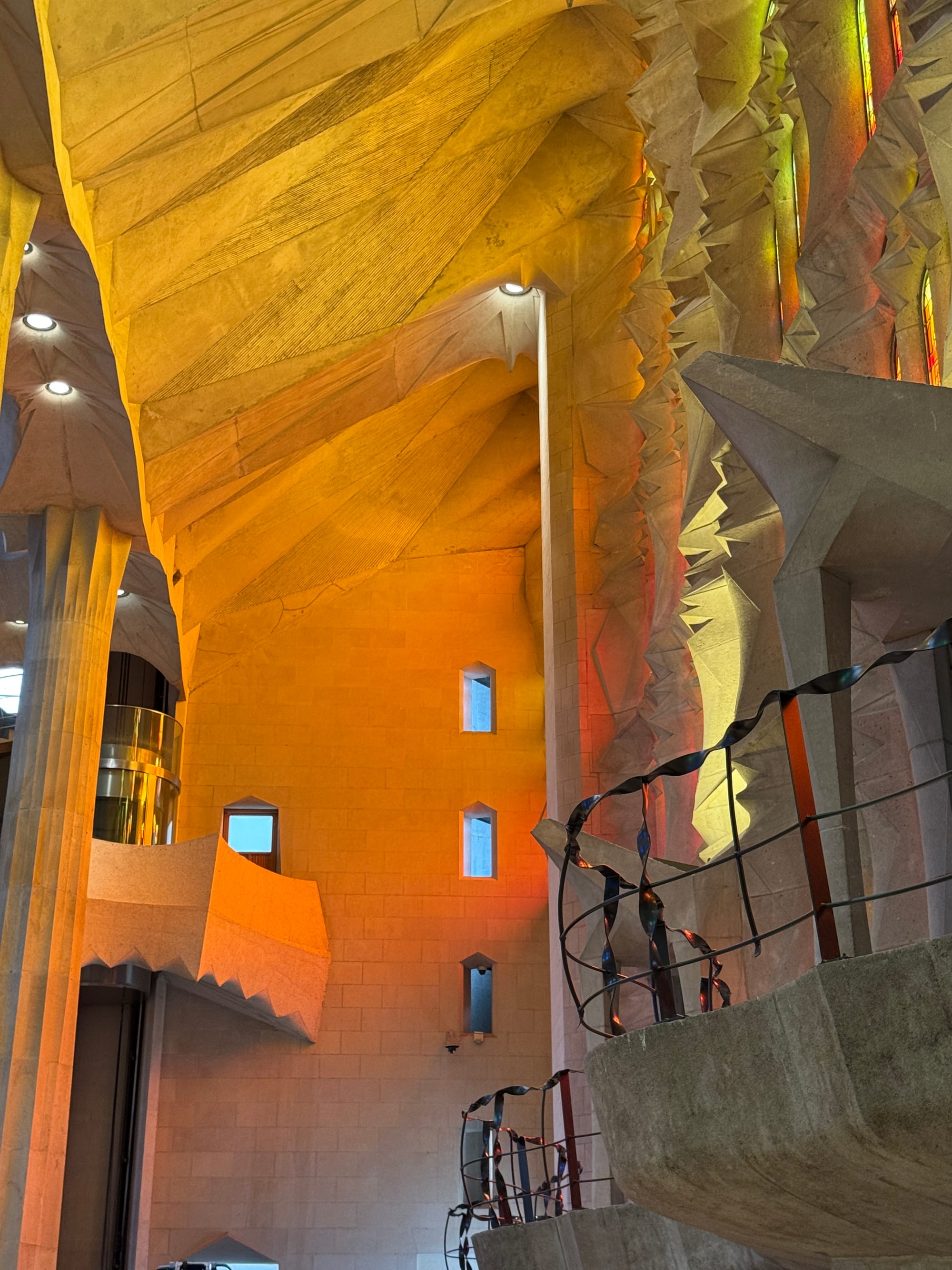
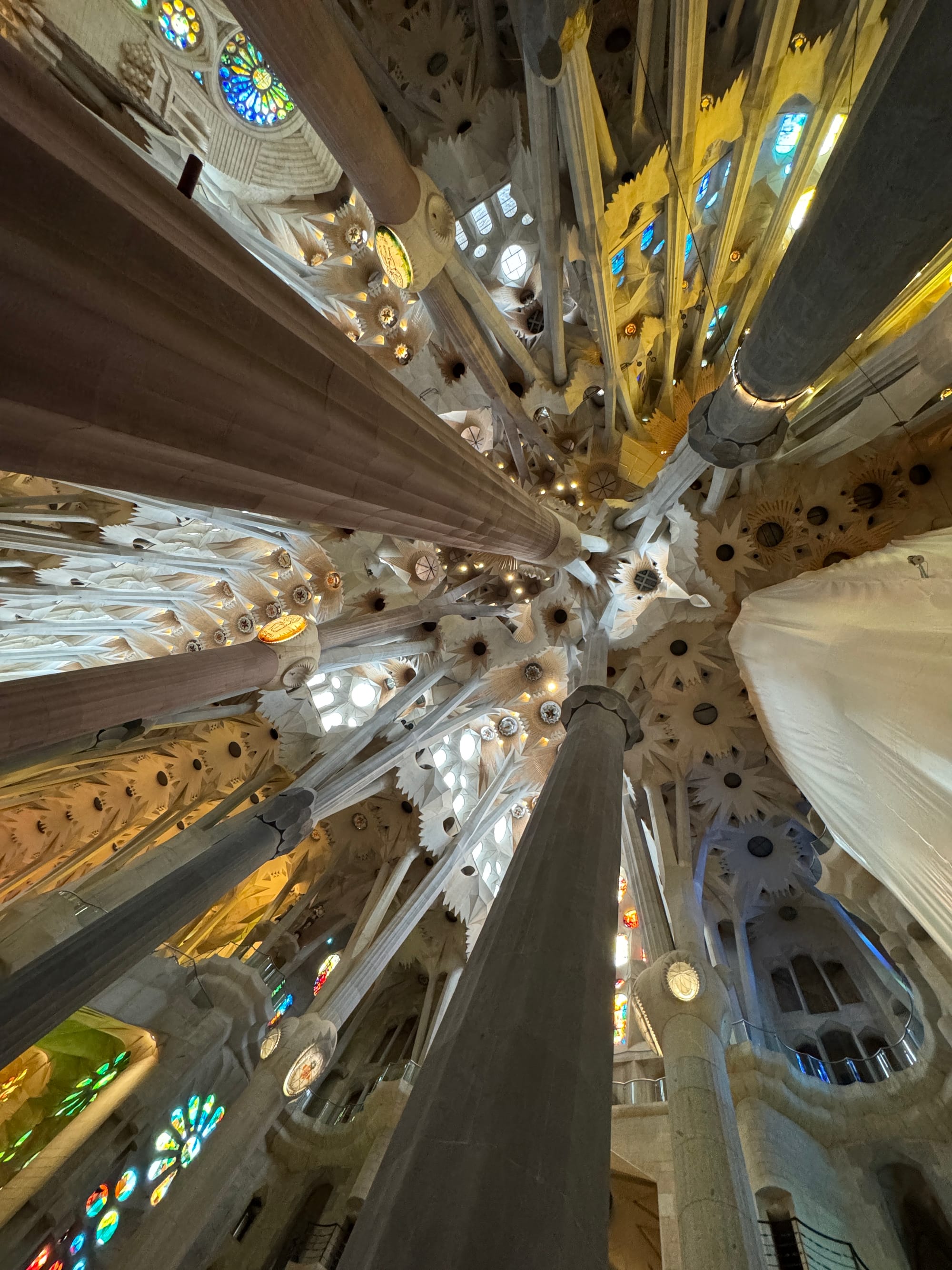
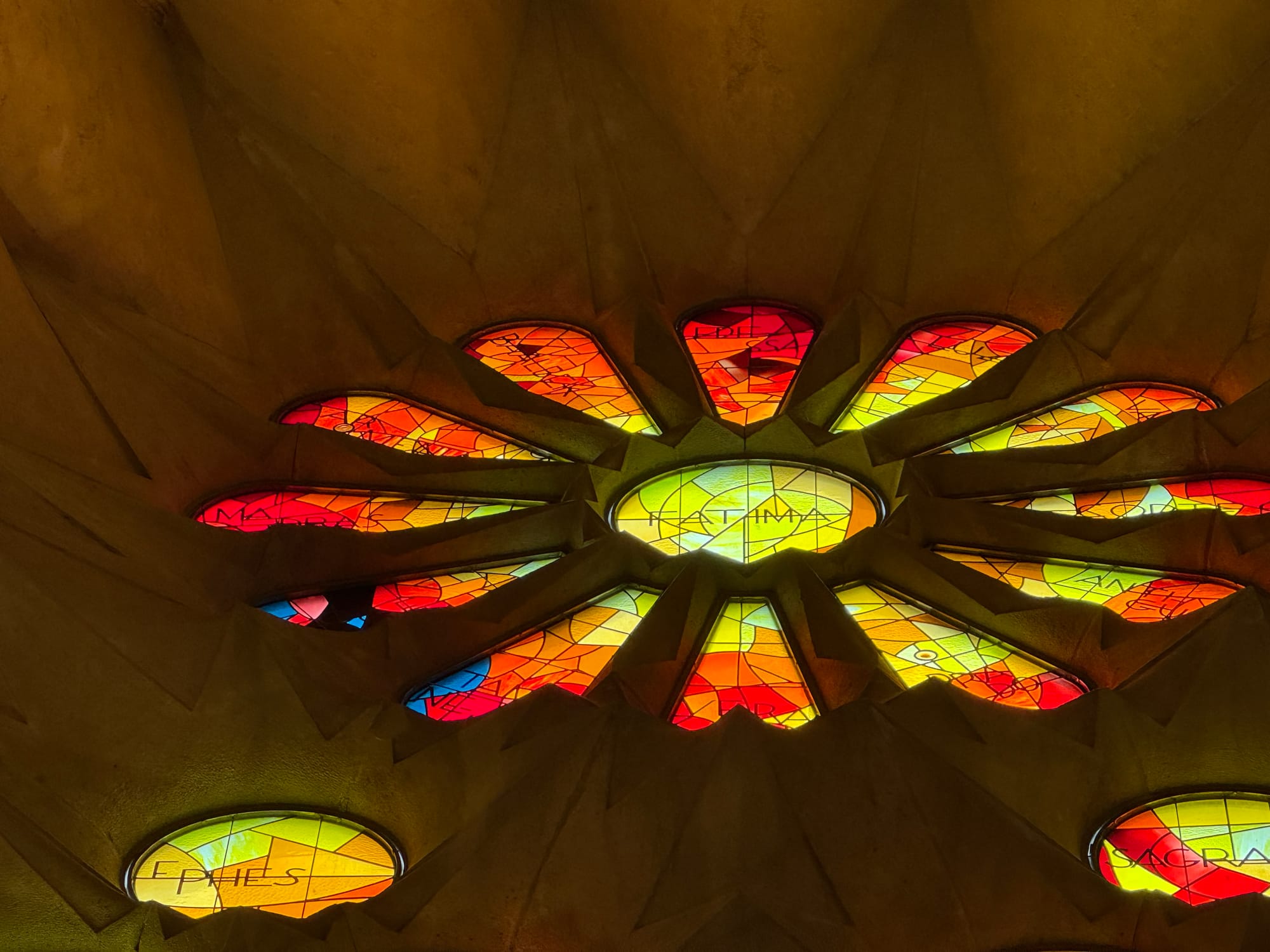
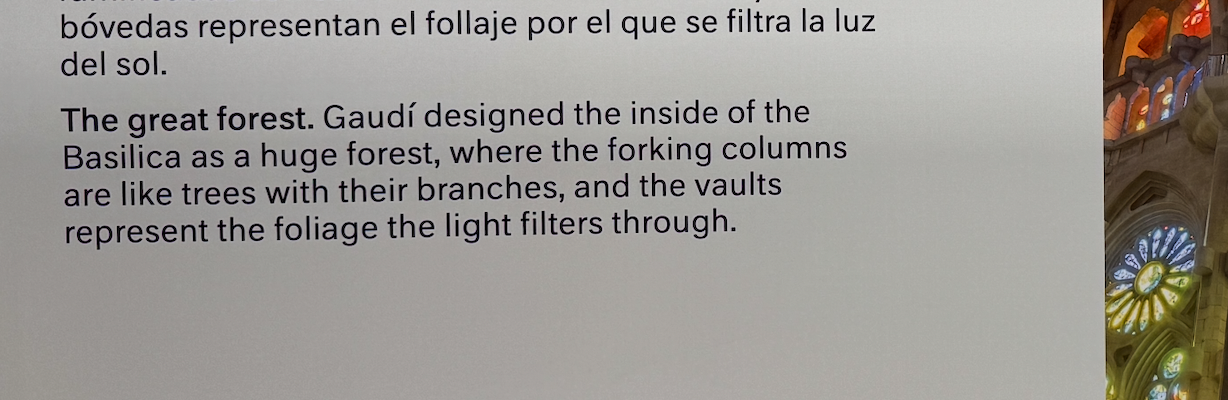
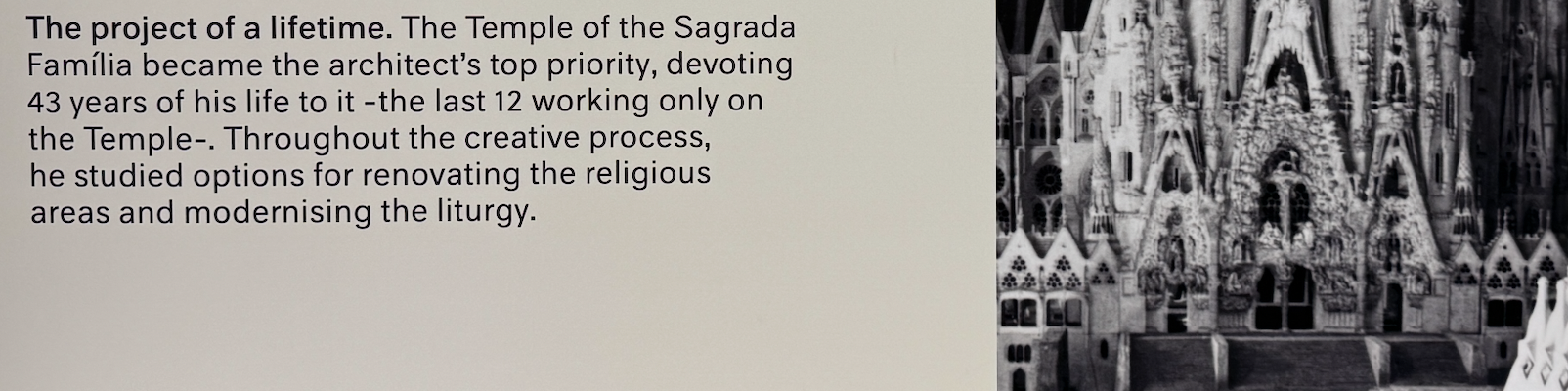
A collection of images and quotes from the Sagrada Familia in Barcelona, and the workshop/museum below the cathedral. Photos by Kevan Gilbert, 2026.
Japanese corporations
Learning from the patterns of the “J-corp”
Writer David Oks explored the question, “Why do Japanese companies make so many different things?” For instance, the brand Toto, which we know from their logo on public toilets, also make: bathroom tiles, modular kitchens, and memory chips. Their products share an advanced ceramics breakthrough called the electrostatic chuck, or the “e-chuck.” Beyond e-chucks, Oks says J-corps tend to last longer and create diverse products because:
- Employees are employed for life. There is low turn-over.
- Performance-based bonuses for individuals are not part of the equation. The team rises when success is reached.
- The worker with expertise and proximity to the challenge has the ability to flag ideas and concerns.
- A Japanese company’s main goal is to keep existing over the long haul, rather than short-term wins.
Reflection questions:
- What is the our “e-chuck”? Our core breakthrough from which every other development springs?
- How do we equip our individuals to act on ideas?
- If the our mission was to “keep existing,” how would we invest?
Yelp!
Learning from launching a community platform
You know Yelp today for its famous ⭐️⭐️⭐️⭐️⭐️ system. But when it first launched, how did they manage to get so many reviews and restaurants, on a brand-new platform? The strategy was community. They hired staff known as “community managers,” and paid them to be out-and-about. These ambassadors would host parties, initiate gatherings, and be intentional about fostering in-person social connection in cities, rotating through key establishments…and then ask those in attendance to leave reviews online. This created a large volume of new content, which benefited the merchant, and eventually, became a resource for the general public. All this without even having their own storefront or front door: the merchants might eventually get a sticker, but Yelp remains the invisible connector, facilitating community connections between people & places.
Reflection questions:
- Who are the your current community ambassadors?
- How would you perform your core mission, without your own building?
The human circulatory system:
Studying the flow of blood through the body
Inside the human body is a remarkable system. Your blood is carrying what’s needed to stay alive: oxygen, the ability to stop bleeding (platelets), tools to fight infection (white blood cells), and even garbage collection services (plasma).
It travels through you on the highway of your blood vessels: arteries (flowing away from the heart), veins (travelling back to it), and capillaries (the bridges between).
All of this, pumped through one powerful, constantly-beating muscular organ: the heart, pumping almost 5 litres of blood per minute.
Reflection questions:
- Reflecting on your organization as a body…
- What is the “heart” of the system, providing power?
- What is being distributed throughout the system?
- If the body uses arteries, veins and capillaries, what pathways does your org use to distribute its resources?
- What would healthy flow look like, within your org as a body?
There you go! You can use these for your own personal reflection, but it's better in a group. Feel free to drop me (Kevan) a note if you'd like to explore how this might land in a live session with your own organization!